The financial and economic collapse of 2008 in the United States precipitated two "revolutionary" movements: one on the right, the Tea Party, and one on the left, the Occupy Movement. If we now ask what each has accomplished, the answers are straightforward: the Tea Party a great deal, the Occupy Movement not much.
Both did their demonstration thing, but the Tea Party didn't stop there. After the street theatre, they doffed their tricorn hats, laid down their muskets, and carried their anger into the political sphere via the Republican Party. They changed that party and they changed the country. They elected Congressmen, Senators, state governors and other officials amenable to their principles and sent the country reeling to the right. Their success is quite extraordinary. The Occupy Movement, by contrast, seems to have hardly changed the country at all.
All the Republican candidates for president found it necessary to sound more like Tea Party members than members of a formerly moderate centre-right Republican Party. Barack Obama and the Democratic Party, on the other hand, seem to have been barely touched by the Occupy Movement.
Why the difference? Aside from their contrasting philosophies, the two parties differ in something else—age. Tea Party members tend to be middle-aged to older, Occupy members young. Older people tend to use the system, youth tend to reject the system—that, after all, is what rebellious youth do. So perhaps we could not expect the Occupy Movement to storm the Democratic Party en masse, as the Tea Partiers did with the Republican Party.
Another, and much more significant, difference is big money. Big money now dominates politics in the United States. That doesn't interfere with the goals of the Tea Party or the Republican Party. Both are comfortable with big money influence: the Republicans have always been the party of the rich and the Tea Party was partly created and funded by big money. So the Tea Party/Republican Party/big money relationship makes for a happy ménage à trois.
But the power of big money is precisely what the Occupy Movement is opposed to, and the Democratic Party is hardly less dependent on big money than the Republican Party. So there is a serious conflict. If the Occupiers were to move into the Democratic Party as the Tea Partiers have into the Republican Party, their message would at least be diluted if not drowned entirely by the race for funding. Barack Obama seeks the financial favour of bankers as much as Mitt Romney does. Who would have his ear—the guys with the chequebooks or the guys with the abstract principles?
Yet if the Occupy Movement is to create change as the Tea Party has done, it cannot remain aloof forever from the political mainstream. The anti-war movement did and achieved success, but that was a campaign
with an intensely focused goal, not at all like the rather nebulous goals of
the Occupy Movement. Even the civil rights movement, initially outside
mainstream politics, ultimately had to come in from the cold before the
important changes were made.
This will apply to the Occupy Movement as well. Legislation will be necessary to change the economic and political systems in significant ways, and that means either joining and attempting to reform the Democratic Party, or amassing enough supporters outside the two main parties to sway elections. Or, I suppose, forming a new political party. In a system now a captive of big money, any option presents a huge challenge.
19 July 2012
18 July 2012
The revolution and the reality—why Egypt elected Islamists
No small amount of surprise was generated by the recent elections in Egypt when Islamist parties swept the parliamentary elections and the Muslim Brotherhood candidate won the presidential election. Coming after a revolution conducted by progressive elements, convincing victories for Islamists was unexpected.
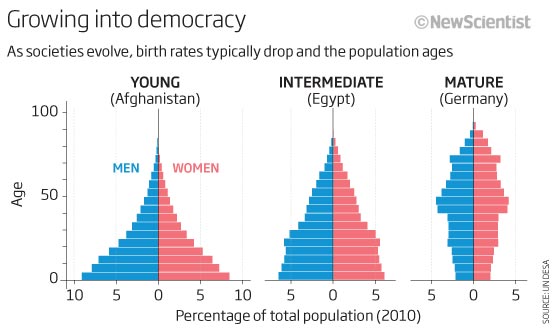
But it shouldn't have been. The revolutionaries were mainly young, urban and secular. But most Egyptians are rural, conservative and devoutly Muslim. We heard a great deal about the former in our newspapers and TV—they were creating the action and thereby the news—but very little about the latter, toiling away on their subsistence farms. But when the elections followed the revolution and the masses turned out, the latter emerged in their numbers and had their way.
The news, with its total emphasis on the revolutionaries, led many to believe the new Egypt would be not only a democratic place but a liberal place. Whether that will happen, even if the country becomes a democracy—and the military will have something to say about that—a lot will depend on the magnanimity of the Islamists, principally the Muslim Brotherhood.
Will, for example, the Brotherhood and their allies promote the equality of women, raising them from the oppressive conditions in which they currently find themselves? Will they guarantee Christians, atheists and others the same rights as Muslims? Will the rule of law trump religious dictate?
Early on, the Brotherhood is indicating they will be accommodating. The attitude of the Egyptian people is, however, not entirely encouraging. Recent surveys indicate that while two-thirds of Egyptians prefer democracy over other systems, two-thirds also believe that Islam should play a major role in politics. Furthermore, 60 per cent believe that laws should strictly follow the Koran. A majority, but not a very convincing one (58 per cent) believe that women should have equal rights to men.
So the Egyptians have a way to go on the road to a free and equitable society. They must overcome first a recalcitrant military to achieve democracy and then an entrenched religious conservatism to achieve full human rights. I wish them success.
But it shouldn't have been. The revolutionaries were mainly young, urban and secular. But most Egyptians are rural, conservative and devoutly Muslim. We heard a great deal about the former in our newspapers and TV—they were creating the action and thereby the news—but very little about the latter, toiling away on their subsistence farms. But when the elections followed the revolution and the masses turned out, the latter emerged in their numbers and had their way.
The news, with its total emphasis on the revolutionaries, led many to believe the new Egypt would be not only a democratic place but a liberal place. Whether that will happen, even if the country becomes a democracy—and the military will have something to say about that—a lot will depend on the magnanimity of the Islamists, principally the Muslim Brotherhood.
Will, for example, the Brotherhood and their allies promote the equality of women, raising them from the oppressive conditions in which they currently find themselves? Will they guarantee Christians, atheists and others the same rights as Muslims? Will the rule of law trump religious dictate?
Early on, the Brotherhood is indicating they will be accommodating. The attitude of the Egyptian people is, however, not entirely encouraging. Recent surveys indicate that while two-thirds of Egyptians prefer democracy over other systems, two-thirds also believe that Islam should play a major role in politics. Furthermore, 60 per cent believe that laws should strictly follow the Koran. A majority, but not a very convincing one (58 per cent) believe that women should have equal rights to men.
So the Egyptians have a way to go on the road to a free and equitable society. They must overcome first a recalcitrant military to achieve democracy and then an entrenched religious conservatism to achieve full human rights. I wish them success.
14 July 2012
The amusing story of JPMorgan Chase
Reading about the latest foibles of JPMorgan Chase, the largest bank in the United States, one cannot help but chuckle. CEO Jamie Dimon initially reported a trading blunder had cost the bank a mere $2-billion and dismissed concerns as a "tempest in a
teapot." He now admits the tempest may have cost the bank $5.8-billion and that's not the end of it. He further admits that if financial markets go south, the bank's loss could run up to
$7.5 billion. So the loss is some number of billions ... give or take a couple of billion. His lack of precision must be less than reassuring to his shareholders.
But at least Mr. Dimon has now been chastened. No more tempests in a teapot—he now recognizes the tempest is in the real world. After appearing before Congress to apologize and explain
himself, he says the affair has "shaken our company to the core" and points out that heads are rolling. Not his, actually, but those managers in the London office responsible for the trade have been
dismissed without severance and will forfeit two years'
pay.
And some pay it is. The most important head to roll is that of Ina Drew, JPMorgan's chief investment officer, who oversaw the division responsible for the loss and who resigned shortly after the disclosure. Ms Drew received about $29 million in total compensation for 2010 and 2011, and retired with about $57.5 million in stock, pension and other pay, so she should still be left with multimillions after the clawback.
The bank now seems to be suggesting its traders may have acted fraudulently, but not quite so fraudulently as to have broken any laws. Just enough innuendo to provide a scapegoat, but not enough to actually land anyone in jail, perhaps? Ah, the world of bankers—how did a group once so stereotypically dull become so entertaining?
But at least Mr. Dimon has now been chastened. No more tempests in a teapot—he now recognizes the tempest is in the real world. After appearing before Congress to apologize and explain
himself, he says the affair has "shaken our company to the core" and points out that heads are rolling. Not his, actually, but those managers in the London office responsible for the trade have been
dismissed without severance and will forfeit two years'
pay.And some pay it is. The most important head to roll is that of Ina Drew, JPMorgan's chief investment officer, who oversaw the division responsible for the loss and who resigned shortly after the disclosure. Ms Drew received about $29 million in total compensation for 2010 and 2011, and retired with about $57.5 million in stock, pension and other pay, so she should still be left with multimillions after the clawback.
The bank now seems to be suggesting its traders may have acted fraudulently, but not quite so fraudulently as to have broken any laws. Just enough innuendo to provide a scapegoat, but not enough to actually land anyone in jail, perhaps? Ah, the world of bankers—how did a group once so stereotypically dull become so entertaining?
13 July 2012
Call for international solidarity with Canadian scientists
As the federal government's assault on science encounters increased resistance from Canadian scientists, the international community increasingly takes notice. In a recent column in The Guardian, science writer Alice Bell suggests that our scientists deserve international support, saying "We can't pretend Canadian science is simply a Canadian matter any more
than we can pretend we can separate the natural world from our political
decisions."
Among other items, Ms. Bell mentions the cancelled funding for the Experimental Lakes Area, a research facility for ecosystem-scale experimental investigations where scientists from all over the world have studied for generations. The facility has conduced internationally recognized research into climate change since 1968 and provided the first evidence for acid rain. Its closing has understandably generated international concern while further damaging our country's rapidly sinking reputation.
But our reputation is hardly the point. As Ms. Bell points out, our scientists' work has global implications. Making us look bad in the eyes of the world is a trivial matter compared to undermining the health of our planet, and losing institutions like the Experimental Lakes Area will contribute to just that. So her message is right on: the international community should defend our scientists for its own sake as well as ours.
Among other items, Ms. Bell mentions the cancelled funding for the Experimental Lakes Area, a research facility for ecosystem-scale experimental investigations where scientists from all over the world have studied for generations. The facility has conduced internationally recognized research into climate change since 1968 and provided the first evidence for acid rain. Its closing has understandably generated international concern while further damaging our country's rapidly sinking reputation.
But our reputation is hardly the point. As Ms. Bell points out, our scientists' work has global implications. Making us look bad in the eyes of the world is a trivial matter compared to undermining the health of our planet, and losing institutions like the Experimental Lakes Area will contribute to just that. So her message is right on: the international community should defend our scientists for its own sake as well as ours.
09 July 2012
Australia's Girl Guides drop the Queen ... and God
Having posted recently about an attempt to purge swearing allegiance to the Queen from the Canadian Oath of Citizenship, I couldn't help but notice an article in The Guardian about Australia's Girl Guides dropping reference to Her Majesty in their pledge, or "promise" as it is properly called. The Guides have replaced "do my duty to God, to serve the Queen and my country" with "to be true to myself and develop my beliefs to serve my community and Australia." Not only has the Queen between deleted but, even more importantly, God as well.
Belinda Allen, director of Girl Guides Australia, explained: "Many
of the members didn't feel that with our multicultural community of
people from 200 nations that it was necessarily relevant for the Queen
to be mentioned. We're open to girls from all cultures, backgrounds and faiths and we listened to our membership before we made the change." Nicely said, Belinda.
Here is yet another example of women (little ones) liberating themselves from fusty tradition. The Australian Cub Scouts, on the other hand, have only timidly allowed their members to drop the Queen if they so choose, but God stays.
Nonetheless, if the Australian Girl Guides can cut the apron strings of monarchy, surely we grown-up Canadians can manage it.
Belinda Allen, director of Girl Guides Australia, explained: "Many
of the members didn't feel that with our multicultural community of
people from 200 nations that it was necessarily relevant for the Queen
to be mentioned. We're open to girls from all cultures, backgrounds and faiths and we listened to our membership before we made the change." Nicely said, Belinda.Here is yet another example of women (little ones) liberating themselves from fusty tradition. The Australian Cub Scouts, on the other hand, have only timidly allowed their members to drop the Queen if they so choose, but God stays.
Nonetheless, if the Australian Girl Guides can cut the apron strings of monarchy, surely we grown-up Canadians can manage it.
06 July 2012
Fukushima—Japan's remarkable mea culpa
There are mea culpas and there are mea culpas. The report by an independent commission on the nuclear disaster at Japan's Fukushima nuclear plant is a dandy. In the preface to the report the commission chairman, Kiyoshi Kurokawa, a medical doctor and professor emeritus at Tokyo University, laid it on without mercy. "Its fundamental causes," he wrote, "are to be found in the ingrained
conventions of Japanese culture: our reflexive obedience; our reluctance
to question authority; our devotion to 'sticking with the program';
our groupism; and our insularity."
He went on to summarize: "What must be admitted—very painfully—is that this was a disaster 'Made in Japan.'"
The report described how the "conventions of Japanese culture" manifested themselves, sparing none of the agencies involved: "The Fukushima nuclear power plant accident was the result of collusion between the government, the regulators and Tepco, and the lack of governance by said parties." It accused Tepco, the plant owner, and regulators at the nuclear and industrial safety agency of failing to adequately account for the area's susceptibility to earthquakes and tsunamis.
I stand in awe of the good doctor and his commission. How rare for someone in a position of authority to blame their own culture for a national tragedy. No scapegoats, he is saying, we have seen the enemy and it is us. Extraordinary ... and immensely commendable.
He went on to summarize: "What must be admitted—very painfully—is that this was a disaster 'Made in Japan.'"
The report described how the "conventions of Japanese culture" manifested themselves, sparing none of the agencies involved: "The Fukushima nuclear power plant accident was the result of collusion between the government, the regulators and Tepco, and the lack of governance by said parties." It accused Tepco, the plant owner, and regulators at the nuclear and industrial safety agency of failing to adequately account for the area's susceptibility to earthquakes and tsunamis.
I stand in awe of the good doctor and his commission. How rare for someone in a position of authority to blame their own culture for a national tragedy. No scapegoats, he is saying, we have seen the enemy and it is us. Extraordinary ... and immensely commendable.
04 July 2012
Roach vs. the Queen
"I affirm that I will be faithful and bear true allegiance to Her Majesty Queen Elizabeth II, Queen of Canada, Her Heirs and Successors, and that I will faithfully observe the laws of Canada and fulfil my duties as a Canadian citizen."
Just kidding. Of course I don't. This is, of course, the Canadian Oath of Citizenship, which I have never taken and the first part of which, the bit about being faithful to and bearing allegiance to dear Elizabeth, I could not affirm in good conscience.The latter part presents no problem.
I was prompted to ponder this when reading about the case of Charles Roach. Roach has been resident in this country for 57 years and has wanted to become a citizen but has never been able to get past pledging allegiance to the Crown, claiming it offends his freedom of conscience. He calls it an "oath to a symbol of racism,” referring to England’s colonial past. He has never had success getting it struck down in the courts but now, expecting to die from cancer within the next 18 months and wanting to become a Canadian before he goes, is making one last attempt. The Ontario Superior Court has given Mr. Roach and three others permission to argue that the oath to the Queen is unconstitutional. If they win, the federal government will have to rewrite the oath.
There is another way of dodging the pledge. Ashok Charles, who had taken the Oath of Citizenship in 1977, publicly recanted the portion of the oath that makes reference to the monarch and informed Citizenship and Immigration Canada about his recantation in a notarized document. He later claimed that Citizenship and Immigration had informed him in writing that his citizenship had not been affected. Unfortunately, if Mr. Roach's court case fails, he may not have time to take this approach.
While we celebrate the Queen's Diamond Jubilee—or while some of us do, I beg to be excused—we might ask ourselves why we, the citizens of a democratic nation, are still swearing allegiance to a foreign, unelected head of state who got her job not by merit but by birthright. I recognize she has little real power, so perhaps it doesn't matter all that much. And not being an Asian or African, I may lack Mr. Roach's critical perspective, but even I find that accepting the British Queen as our head of state seems a bit immature. It seems rather like clinging to mommy's skirts when you're supposed to be all grown up. Mr. Roach does have a point.
Just kidding. Of course I don't. This is, of course, the Canadian Oath of Citizenship, which I have never taken and the first part of which, the bit about being faithful to and bearing allegiance to dear Elizabeth, I could not affirm in good conscience.The latter part presents no problem.
I was prompted to ponder this when reading about the case of Charles Roach. Roach has been resident in this country for 57 years and has wanted to become a citizen but has never been able to get past pledging allegiance to the Crown, claiming it offends his freedom of conscience. He calls it an "oath to a symbol of racism,” referring to England’s colonial past. He has never had success getting it struck down in the courts but now, expecting to die from cancer within the next 18 months and wanting to become a Canadian before he goes, is making one last attempt. The Ontario Superior Court has given Mr. Roach and three others permission to argue that the oath to the Queen is unconstitutional. If they win, the federal government will have to rewrite the oath.There is another way of dodging the pledge. Ashok Charles, who had taken the Oath of Citizenship in 1977, publicly recanted the portion of the oath that makes reference to the monarch and informed Citizenship and Immigration Canada about his recantation in a notarized document. He later claimed that Citizenship and Immigration had informed him in writing that his citizenship had not been affected. Unfortunately, if Mr. Roach's court case fails, he may not have time to take this approach.
While we celebrate the Queen's Diamond Jubilee—or while some of us do, I beg to be excused—we might ask ourselves why we, the citizens of a democratic nation, are still swearing allegiance to a foreign, unelected head of state who got her job not by merit but by birthright. I recognize she has little real power, so perhaps it doesn't matter all that much. And not being an Asian or African, I may lack Mr. Roach's critical perspective, but even I find that accepting the British Queen as our head of state seems a bit immature. It seems rather like clinging to mommy's skirts when you're supposed to be all grown up. Mr. Roach does have a point.
Australia's Dutch disease
Canada is not alone in suffering from the insidious Dutch disease. Australia, too, is feeling the pain. Whereas Canada's version is caused by booming tar sands production, Australia's is caused by booming iron and coal production.
The resources industry is credited in part for keeping Australia out of recession and insulating it from the worst effects of the global financial crisis. On the other hand, because of the boost it has given to the Australian dollar, it has created big losers. According to Saul Eslake, chief economist at Bank of America Merrill Lynch (Australia), "There's been a 'two-speed' economy. On one side is the booming mining sector and some of the industries that hang off it, like heavy construction. On the other, you've got floundering industries like manufacturing, tourism, retailing and higher education, which employ many more people than mining." Sound familiar?
In order to help even out the benefits, the Australian government has levied a 30 per cent tax on iron ore and coal profits over A$75-million.
The mining industry is fighting back in a big way ... and winning. The Minerals Council of Australia
launched a multimillion-dollar advertising campaign
which led to the tax eventually being watered down. The campaign also helped bring down former Prime Minister Kevin Rudd. The mining companies plan to continue their advertising assault. Furthermore, they are increasing their grip on the press. Rupert Murdoch's right-wing News Corp already owns eight of the country's 12 major daily newspapers and mining magnate Gina Rinehart is making a move for majority control of Fairfax Media which owns three of the remaining four. News Corp also dominates regional and suburban newspaper publishing.
The defeat of the ruling Labor Party, already unpopular, will be almost guaranteed with mining company ad campaigns and big donations to the opposition combined with a hostile press. This will bring to power the conservative, mining industry-friendly Liberal/National Party coalition (it has promised to repeal the mining tax as well as Australia's carbon tax). This, too, will be familiar to Canadians: a government committed to defending an extractive industry above all else, most particularly above the environment. Polluters won't pay and Dutch disease will persist with its viral mischief.
The resources industry is credited in part for keeping Australia out of recession and insulating it from the worst effects of the global financial crisis. On the other hand, because of the boost it has given to the Australian dollar, it has created big losers. According to Saul Eslake, chief economist at Bank of America Merrill Lynch (Australia), "There's been a 'two-speed' economy. On one side is the booming mining sector and some of the industries that hang off it, like heavy construction. On the other, you've got floundering industries like manufacturing, tourism, retailing and higher education, which employ many more people than mining." Sound familiar?
In order to help even out the benefits, the Australian government has levied a 30 per cent tax on iron ore and coal profits over A$75-million.
The mining industry is fighting back in a big way ... and winning. The Minerals Council of Australia
launched a multimillion-dollar advertising campaign
which led to the tax eventually being watered down. The campaign also helped bring down former Prime Minister Kevin Rudd. The mining companies plan to continue their advertising assault. Furthermore, they are increasing their grip on the press. Rupert Murdoch's right-wing News Corp already owns eight of the country's 12 major daily newspapers and mining magnate Gina Rinehart is making a move for majority control of Fairfax Media which owns three of the remaining four. News Corp also dominates regional and suburban newspaper publishing.The defeat of the ruling Labor Party, already unpopular, will be almost guaranteed with mining company ad campaigns and big donations to the opposition combined with a hostile press. This will bring to power the conservative, mining industry-friendly Liberal/National Party coalition (it has promised to repeal the mining tax as well as Australia's carbon tax). This, too, will be familiar to Canadians: a government committed to defending an extractive industry above all else, most particularly above the environment. Polluters won't pay and Dutch disease will persist with its viral mischief.
29 June 2012
No more pecker snipping in Germany
With a ruling that circumcising boys constitutes grievous bodily harm, a German court has effectively outlawed the practice in that country. The case was brought against a doctor in Cologne who circumcised a four-year-old Muslim boy on his parents' wishes. When, a few days after the operation, the boy was bleeding heavily and taken to a hospital, the doctor was charged. "The body of the child is irreparably and permanently changed by a
circumcision," the court said. "This change contravenes the interests of
the child to decide later on his religious beliefs."
As might be expected, Jewish and Muslim leaders immediately attacked the decision, calling it insensitive and discriminatory, and saying it was an attack on centuries of religious tradition.
It is indeed an attack on religious tradition, but calling a legal ruling against cutting off bits of little boys' penises insensitive and discriminatory is more a comment on the barbaric traditions of religion than on the court's decision. Deliberately inflicting injury on a baby in order to enforce conformity with religion is sordid. The surprise is that they continue to get away with it in modern societies.
What kind of religious observance is this anyway? Why would God put a foreskin there if He meant it to be chopped off? Is this god an idiot, or a sadist?
Not that boys have only been snipped for religious reasons. Circumcision became very popular at the turn of the last century in order to prevent masturbation, and more recently in order to prevent AIDS. The supposed benefits all vanish with further studies—the disease prevention worked about as well as the masturbation prevention.
Holm Putzke, a criminal law expert at the University of Passau, observes, "After the knee-jerk indignation has subsided, hopefully a discussion will kick off about how much religiously motivated violence against children a society is ready to tolerate." We should consider also the latter part of the German court's ruling about contravening the child's future ability to decide on his own religious beliefs.
We have, in this country, seen a particularly tragic example of indoctrinating children in religion—the case of Omar Khadr. Omar was immersed in extreme religious belief from the time he was born with catastrophic results. His parents turned him into a jihadist when he had barely reached his teens, he was nearly killed in war, brutally abused by the Americans and finally betrayed by his own country. With this tragedy staring us in the face, it would seem long overdue to give thought to just how far we are prepared to go in allowing religious zealots to theologically abuse their children.
As might be expected, Jewish and Muslim leaders immediately attacked the decision, calling it insensitive and discriminatory, and saying it was an attack on centuries of religious tradition.
It is indeed an attack on religious tradition, but calling a legal ruling against cutting off bits of little boys' penises insensitive and discriminatory is more a comment on the barbaric traditions of religion than on the court's decision. Deliberately inflicting injury on a baby in order to enforce conformity with religion is sordid. The surprise is that they continue to get away with it in modern societies.
What kind of religious observance is this anyway? Why would God put a foreskin there if He meant it to be chopped off? Is this god an idiot, or a sadist?
Not that boys have only been snipped for religious reasons. Circumcision became very popular at the turn of the last century in order to prevent masturbation, and more recently in order to prevent AIDS. The supposed benefits all vanish with further studies—the disease prevention worked about as well as the masturbation prevention.
Holm Putzke, a criminal law expert at the University of Passau, observes, "After the knee-jerk indignation has subsided, hopefully a discussion will kick off about how much religiously motivated violence against children a society is ready to tolerate." We should consider also the latter part of the German court's ruling about contravening the child's future ability to decide on his own religious beliefs.
We have, in this country, seen a particularly tragic example of indoctrinating children in religion—the case of Omar Khadr. Omar was immersed in extreme religious belief from the time he was born with catastrophic results. His parents turned him into a jihadist when he had barely reached his teens, he was nearly killed in war, brutally abused by the Americans and finally betrayed by his own country. With this tragedy staring us in the face, it would seem long overdue to give thought to just how far we are prepared to go in allowing religious zealots to theologically abuse their children.
27 June 2012
The windmill next door
As a citizen of Alberta, Canada's oil province and the birthplace of wind energy in Canada, I have perhaps less innate concern about windmills than citizens from other provinces. Indeed, the first time I walked up to a windmill, I was favourably impressed. Although I found its size somewhat intimidating, I found the rhythmic swish of its blades as soothing as ocean waves on the beach.I often wonder about the reaction in Holland when the first windmills were built there centuries ago. Was there debate between those who appreciated the clean energy and those who saw the great ungainly things as blots on the landscape? Will the sleek modern models we see now become, like their ancient cousins, tourist attractions, the stuff of postcards home?
The Pembina Institute isn't hoping for anything that grand, but it is hoping to improve the image of the machines in Ontario. It has arranged for Heidi Eijgel, an Alberta rancher who has lived next to a wind farm for a decade, to tour Southern Ontario this week and share her experiences. It is at least a better message than tar sands.
Drunk driving a capital offense?
If you think that Alberta's new drunk driving laws are tough, consider Iran. Two Iranians, their names not released by authorities, have been sentenced to death for persistent consumption of alcohol. Not that they weren't warned. They had been convicted twice before and subjected to 160 lashes each time, but they couldn't stay on the wagon. Iranian Sharia law forbids Muslims the use, manufacturing or trading of all types of alcoholic drinks. Three strikes and you're out ... literally. Unless you're a Christian, which this unfortunate duo was not.
Nonetheless, if you concluded from this that Iranians are dissuaded from imbibing, you would be wrong. Consumption is on the rise—the country's newspapers reported recently that the amount of confiscated alcohol has increased by 69 per cent in the past year. One paper quoted official figures that suggested it takes 22 minutes to get access to drugs and only 17 minutes to find alcohol. The Deputy Health Minister, Alireza Mesdaghinia, has expressed concern about an apparent increase in "abnormal behaviors such as alcohol consumption." The head of the Health Ministry's Policy Making Council, Bagher Larijani, states that despite an ongoing police crackdown, "There is no wedding party without a special room for those who want to drink alcohol and have a good time."
It would appear that North America isn't the only place drug wars don't work. For those who think tougher laws are the answer, they might keep in mind the utter failure of even Iran's barbaric legal regime.
Nonetheless, if you concluded from this that Iranians are dissuaded from imbibing, you would be wrong. Consumption is on the rise—the country's newspapers reported recently that the amount of confiscated alcohol has increased by 69 per cent in the past year. One paper quoted official figures that suggested it takes 22 minutes to get access to drugs and only 17 minutes to find alcohol. The Deputy Health Minister, Alireza Mesdaghinia, has expressed concern about an apparent increase in "abnormal behaviors such as alcohol consumption." The head of the Health Ministry's Policy Making Council, Bagher Larijani, states that despite an ongoing police crackdown, "There is no wedding party without a special room for those who want to drink alcohol and have a good time."
It would appear that North America isn't the only place drug wars don't work. For those who think tougher laws are the answer, they might keep in mind the utter failure of even Iran's barbaric legal regime.
Jimmy Carter, drone attacks and moral authority
Jimmy Carter was, in the opinion of this non-American, one of the better presidents the United States has had in recent history. Americans didn't agree of course, and dumped him after one term, but his record speaks in his favour. And nowhere, does it speak more eloquently than on the subject of human rights.
As governor of Georgia, he was the first statewide office holder in the Deep South to state publicly that racial discrimination had no place in the future of the state and went on to appoint many African Americans to state boards and offices. Although once a supporter of the death penalty, he became a staunch opponent and is now known for his outspoken opposition. Recently, he has expressed the view that the Democratic Party should be more pro-life, even though as president he found it difficult to uphold Roe v. Wade because of his strong Christian beliefs. He is a man who wrestles with moral issues and has the courage to change his mind as a result.
After leaving the presidency, he founded the Carter Center to advance human rights and alleviate unnecessary human suffering, and in 2002 was awarded the Nobel Peace Prize for his work "to find peaceful solutions to international conflicts, to
advance democracy and human rights, and to promote economic and social
development," the only president to receive the prize for work done after leaving office.
This is a man whose voice carries moral authority and he recently used that authority to denounce the Obama administration for sanctioning the “widespread abuse of human rights” by authorizing drone strikes to kill suspected terrorists. He accused the administration of violating 10 of the 30 articles of the Universal Declaration of Human Rights, and declared that the “United States is abandoning its role as the global champion of human rights.” Not stopping there, he criticized the government for failing to close Guantanamo and for “unprecedented violations of our rights to privacy through warrantless wiretapping and government mining of our electronic communications.”
Condemnation of a sitting Democratic president by a former Democratic president is very serious criticism indeed, and one hopes that Barack Obama will listen and rethink his kill lists and his assassinations. If he does, he may return some moral authority to the Democratic Party ... and to his country.
As governor of Georgia, he was the first statewide office holder in the Deep South to state publicly that racial discrimination had no place in the future of the state and went on to appoint many African Americans to state boards and offices. Although once a supporter of the death penalty, he became a staunch opponent and is now known for his outspoken opposition. Recently, he has expressed the view that the Democratic Party should be more pro-life, even though as president he found it difficult to uphold Roe v. Wade because of his strong Christian beliefs. He is a man who wrestles with moral issues and has the courage to change his mind as a result.
After leaving the presidency, he founded the Carter Center to advance human rights and alleviate unnecessary human suffering, and in 2002 was awarded the Nobel Peace Prize for his work "to find peaceful solutions to international conflicts, to
advance democracy and human rights, and to promote economic and social
development," the only president to receive the prize for work done after leaving office.This is a man whose voice carries moral authority and he recently used that authority to denounce the Obama administration for sanctioning the “widespread abuse of human rights” by authorizing drone strikes to kill suspected terrorists. He accused the administration of violating 10 of the 30 articles of the Universal Declaration of Human Rights, and declared that the “United States is abandoning its role as the global champion of human rights.” Not stopping there, he criticized the government for failing to close Guantanamo and for “unprecedented violations of our rights to privacy through warrantless wiretapping and government mining of our electronic communications.”
Condemnation of a sitting Democratic president by a former Democratic president is very serious criticism indeed, and one hopes that Barack Obama will listen and rethink his kill lists and his assassinations. If he does, he may return some moral authority to the Democratic Party ... and to his country.
25 June 2012
Scientists warn, politicians ignore
The Global Network of Science Academies, representing 105 science academies around the world, issued a press release last week highlighting what they referred to as "two of the most profound
challenges to humanity—population and consumption," and went on to call for "urgent and coordinated
international action to address them." They emphasized
that, "current patterns of
consumption, especially in high-income countries, are eroding the planet’s
natural capital at rates that are severely damaging the interests of future
generations, and should consequently and urgently be reduced." They offered a range of actions that need to be taken to deal with the challenges.
They went on to mention the "extraordinary opportunity" that policymakers had at the Rio+20 international summit "to take the sound, evidence-based advice of their own academies of science as they make decisions that will affect the future of the planet.”
So, did the policymakers of the 192 countries represented at Rio take the advice of their science academies? One might hope so considering carbon emissions have increased 40% and biodiversity loss has risen 30% in the 20 years since the first Rio conference. But such was not the case. On Friday, the delegates did little more than rubber-stamp a draft agreement that essentially provides no new commitments to fight climate change.
Most of the G20 leaders didn't even bother to show up at the conference. France's new president, Francois Hollande, was there, but Barack Obama, David Cameron, Angela Merkel and, needless to say, Stephen Harper were no-shows. Their excuse is the deepening financial crisis, but that's a bit weak. They could have, if they were interested, taken a flight from Los Cabos to Rio after the G20 conference ended on Tuesday.
Canada's delegation was there making its usual mischief, working to weaken commitments on biodiversity of oceans and fossil fuels and blocking financial commitments to developing countries. When Peter Kent, Canada's Environmental Minister, says he was "very happy, very satisfied" with the outcome you know it was a failure.
Ironically, by ignoring the environmental crisis, world leaders are threatening the long term health of the global economy, precisely the thing they claim to be concerned about.
"We are living beyond the planet's means. That's scientifically proven," says Gisbet Glaser of the International Council for Science, "We're now at a point in human history where we risk degrading the life support system for human development." Do our leaders not recognize the futility of dealing with current economic issues while allowing life support systems for human development to degrade? Are they blind to the big picture? I'm becoming afraid to ask the question.
They went on to mention the "extraordinary opportunity" that policymakers had at the Rio+20 international summit "to take the sound, evidence-based advice of their own academies of science as they make decisions that will affect the future of the planet.”
So, did the policymakers of the 192 countries represented at Rio take the advice of their science academies? One might hope so considering carbon emissions have increased 40% and biodiversity loss has risen 30% in the 20 years since the first Rio conference. But such was not the case. On Friday, the delegates did little more than rubber-stamp a draft agreement that essentially provides no new commitments to fight climate change.
Most of the G20 leaders didn't even bother to show up at the conference. France's new president, Francois Hollande, was there, but Barack Obama, David Cameron, Angela Merkel and, needless to say, Stephen Harper were no-shows. Their excuse is the deepening financial crisis, but that's a bit weak. They could have, if they were interested, taken a flight from Los Cabos to Rio after the G20 conference ended on Tuesday. Canada's delegation was there making its usual mischief, working to weaken commitments on biodiversity of oceans and fossil fuels and blocking financial commitments to developing countries. When Peter Kent, Canada's Environmental Minister, says he was "very happy, very satisfied" with the outcome you know it was a failure.
Ironically, by ignoring the environmental crisis, world leaders are threatening the long term health of the global economy, precisely the thing they claim to be concerned about.
"We are living beyond the planet's means. That's scientifically proven," says Gisbet Glaser of the International Council for Science, "We're now at a point in human history where we risk degrading the life support system for human development." Do our leaders not recognize the futility of dealing with current economic issues while allowing life support systems for human development to degrade? Are they blind to the big picture? I'm becoming afraid to ask the question.
22 June 2012
Bully for the nuns
I'm no fan of the Roman Catholic Church, or organized religion generally, but when the folks in black do a good deed, I'm prepared to recognize it. And the good sisters of Network, a Washington-based Catholic social justice group, are doing a good deed indeed. They have initiated a nine-state bus tour protesting proposed federal budget cuts,
saying they felt called to show how Republican policies are
affecting low-income families.
The nuns' trip was inspired by Rep. Paul Ryan, a Republican from Wisconsin, the architect of the House-passed budget, who said that Catholic social teachings inspired the cutbacks he proposed. The cutbacks would decimate many programs run by sisters.
The Vatican has asked U.S. bishops to look at Network’s ties to another sisterhood, the Leadership Conference of Women Religious, the organization that represents most American nuns. It has accused Women Religious of focusing too much on economic injustice while failing to promote the church’s teachings on abortion and same-sex marriage, and has ordered American bishops to carry out a full-scale overhaul of the organization.
The good sisters of Network seem unfazed by the Vatican's bullying and persist in their advocacy for the less fortunate. Unlike some of their Catholic brothers, such as Rep. Paul Ryan, they seemed to have an ear for Jesus's message.
The nuns' trip was inspired by Rep. Paul Ryan, a Republican from Wisconsin, the architect of the House-passed budget, who said that Catholic social teachings inspired the cutbacks he proposed. The cutbacks would decimate many programs run by sisters.
The Vatican has asked U.S. bishops to look at Network’s ties to another sisterhood, the Leadership Conference of Women Religious, the organization that represents most American nuns. It has accused Women Religious of focusing too much on economic injustice while failing to promote the church’s teachings on abortion and same-sex marriage, and has ordered American bishops to carry out a full-scale overhaul of the organization.
The good sisters of Network seem unfazed by the Vatican's bullying and persist in their advocacy for the less fortunate. Unlike some of their Catholic brothers, such as Rep. Paul Ryan, they seemed to have an ear for Jesus's message.
City charters—progress for Calgary and Edmonton?
The municipal level of government is the orphan of our political system. Cities are, under the Constitution, creatures of the provinces. In 1867, making municipalities wards of the provinces may have made
sense; most people lived on farms or in small towns serving the farms. Eighty
per cent of Canadians were rural. Today, eighty per cent are urban. Canada is part of the greatest human migration in history, a worldwide march from the country to the town. Over half the population of Alberta now lives in two cities: Calgary and Edmonton.
In an attempt to modernize their relationship, the two cities signed an agreement this week with the provincial government that will lead to city charters. Edmonton Mayor Stephen Mandel says talks will first define "who does what"—and then figure out where the money will come from to pay for it. Municipal Affairs Minister Doug Griffiths said he hopes a draft form for the new arrangements will be ready by spring 2013.
Charters are not new for Canadian cities. Montreal, Toronto, Winnipeg and Vancouver, among others, have them. Although charters offer a certain independence, they don't change the fact that cities are still constitutionally subservient to provinces. Provincial governments have the right to bestow authority on cities, and the right to take it away. A charter granted to Halifax in 1841 was extinguished on April 1st, 1999—April Fool's Day—by the provincial government of the day.
So charters may enhance Calgary and Edmonton's abilities to govern themselves, but they will remain the province's subordinates nonetheless, Minister Griffiths' sanguine comment that, “There
is no city versus province .... We all serve the same
taxpayers," notwithstanding.
The ideal would be to have the municipal level of government, which is now in many ways more important than the provincial level, brought into the Constitution as, in fact, Lord Durham recommended in his famous report of 1838. But considering that would take the approval of seven provinces, the chances are slim indeed. The patriation of the Constitution in 1982 offered an opportunity, but neither Ottawa nor the provinces were interested.
Baby steps, such as charters, are probably the only way to enhance the position of Alberta's cities. The charters should at least include a consent clause that would mandate that any alteration to a charter, including its repeal, require the explicit approval of the city’s council.
Many years ago, the American philosopher Lewis Mumford said that the city “is the seat of the temple, the market, the hall of justice, the academy of learning. ... Here is where the issues of civilization are focused." This remains true today. Cities are now our major wealth creators and deserve recognition and power accordingly. Unfortunately, although we are now a metropolitan nation, we remain lumbered with a distribution of powers from an agrarian age.
In an attempt to modernize their relationship, the two cities signed an agreement this week with the provincial government that will lead to city charters. Edmonton Mayor Stephen Mandel says talks will first define "who does what"—and then figure out where the money will come from to pay for it. Municipal Affairs Minister Doug Griffiths said he hopes a draft form for the new arrangements will be ready by spring 2013.
Charters are not new for Canadian cities. Montreal, Toronto, Winnipeg and Vancouver, among others, have them. Although charters offer a certain independence, they don't change the fact that cities are still constitutionally subservient to provinces. Provincial governments have the right to bestow authority on cities, and the right to take it away. A charter granted to Halifax in 1841 was extinguished on April 1st, 1999—April Fool's Day—by the provincial government of the day.
So charters may enhance Calgary and Edmonton's abilities to govern themselves, but they will remain the province's subordinates nonetheless, Minister Griffiths' sanguine comment that, “There
is no city versus province .... We all serve the same
taxpayers," notwithstanding.The ideal would be to have the municipal level of government, which is now in many ways more important than the provincial level, brought into the Constitution as, in fact, Lord Durham recommended in his famous report of 1838. But considering that would take the approval of seven provinces, the chances are slim indeed. The patriation of the Constitution in 1982 offered an opportunity, but neither Ottawa nor the provinces were interested.
Baby steps, such as charters, are probably the only way to enhance the position of Alberta's cities. The charters should at least include a consent clause that would mandate that any alteration to a charter, including its repeal, require the explicit approval of the city’s council.
Many years ago, the American philosopher Lewis Mumford said that the city “is the seat of the temple, the market, the hall of justice, the academy of learning. ... Here is where the issues of civilization are focused." This remains true today. Cities are now our major wealth creators and deserve recognition and power accordingly. Unfortunately, although we are now a metropolitan nation, we remain lumbered with a distribution of powers from an agrarian age.
18 June 2012
The War of 1812—a non-Canadian event
That Mr. Harper and his colleagues are all gung-ho about the War of 1812, and spending millions on commemorating it, is hardly surprising. Reactionaries seem to have a thing about war. Perhaps it appeals to their need for simplicity, for seeing issues in black and white, us and them, and war is the ultimate us and them. And of course the War of 1812 was a British war, and Mr. Harper et al. have a thing about our British heritage as well.
But the War of 1812 was not a Canadian war. Indeed, it occurred generations before Canada even existed. Did winning it, or perhaps I should say not losing it, contribute to Canada as we know it today? Of course it did. But then so did many other things going back into the ancient past, nonetheless they weren't Canadian if they occurred before Confederation. And if the British had decisively lost the war, we might now happily be Americans looking forward to joyously celebrating the 4th of July and regarding the War of 1812 with quite different sentiments. I'm rather glad it worked out the way it did, but if it hadn't I can't possibly say my life would have been any worse or any better—just different.
Is it of interest to know about those events that resulted in modern Canada? Of course it is, at least if you are interested in history, but that doesn't somehow make them Canadian. It is much more sensible to commemorate events that are. If we need anything more than Confederation, I might suggest the patriation of the Constitution in 1982. I certainly wouldn't choose a war.
Others would, of course, have quite different preferences. But let us at least confine the choices to post July 1, 1867, i.e. to Canada.
But the War of 1812 was not a Canadian war. Indeed, it occurred generations before Canada even existed. Did winning it, or perhaps I should say not losing it, contribute to Canada as we know it today? Of course it did. But then so did many other things going back into the ancient past, nonetheless they weren't Canadian if they occurred before Confederation. And if the British had decisively lost the war, we might now happily be Americans looking forward to joyously celebrating the 4th of July and regarding the War of 1812 with quite different sentiments. I'm rather glad it worked out the way it did, but if it hadn't I can't possibly say my life would have been any worse or any better—just different.
Is it of interest to know about those events that resulted in modern Canada? Of course it is, at least if you are interested in history, but that doesn't somehow make them Canadian. It is much more sensible to commemorate events that are. If we need anything more than Confederation, I might suggest the patriation of the Constitution in 1982. I certainly wouldn't choose a war.
Others would, of course, have quite different preferences. But let us at least confine the choices to post July 1, 1867, i.e. to Canada.
15 June 2012
If it ain't one damn thing ...
That China's waterways are badly polluted, is common knowledge. Less well recognized is the increasing pollution of its land. Zhou Jianmin, director of the China Soil Association, reports that, "More areas are being affected, the degree of contamination is
intensifying and the range of toxins is increasing."
The main culprit is arsenic from China's 280,000 mines. Lead and heavy metals from factories and overuse of pesticides and fertilizers by farmers also contribute.
Chen Tongbin of the Chinese Academy of Sciences, while recognizing that the biggest challenge is still water pollution, states, "In the future, the focus must be on soil pollution because that is much harder to deal with. Soil remediation is an immense and growing challenge." Other scientists warn of dire consequences for food production and human health if the challenge isn't met. Chen estimates that up to 20 per cent of China's soil is seriously polluted.
The Chinese government is at least aware of the problem and has been conducting a soil survey for six years. Nonetheless, little has been done and the scientists involved say they have been forbidden from releasing their preliminary findings. The latter will sound familiar to Canadians.
We humans are an ingenious species. We seem to be able to invent no end of ways to foul our nest.
The main culprit is arsenic from China's 280,000 mines. Lead and heavy metals from factories and overuse of pesticides and fertilizers by farmers also contribute.
Chen Tongbin of the Chinese Academy of Sciences, while recognizing that the biggest challenge is still water pollution, states, "In the future, the focus must be on soil pollution because that is much harder to deal with. Soil remediation is an immense and growing challenge." Other scientists warn of dire consequences for food production and human health if the challenge isn't met. Chen estimates that up to 20 per cent of China's soil is seriously polluted.
The Chinese government is at least aware of the problem and has been conducting a soil survey for six years. Nonetheless, little has been done and the scientists involved say they have been forbidden from releasing their preliminary findings. The latter will sound familiar to Canadians.
We humans are an ingenious species. We seem to be able to invent no end of ways to foul our nest.
Even the OECD supports Mulcair
The Organization for Economic Co-operation and Development (OECD) has issued a
report saying that increasing commodity prices is creating an uneven economy in Canada. This, of course, is what Thomas Mulcair has been saying and for which he has been subjected to hysterical attacks by Stephen Harper and assorted provincial premiers.
Not that he needs support from foreign sources. A report commissioned by Industry Canada, i.e. the federal government, found that between 33 and 39 per cent of employment losses in the Canadian manufacturing sector related to exchange rate appreciation between 2002 and 2007 were due to Dutch disease. This report, suppressed by Industry Canada but about to be published in a prestigious journal, is the most rigorous and technically sophisticated of the spate of studies now emerging on the subject, and the only one that actually quantifies employment loss linked specifically to Dutch disease. A report issued by the Institute for Research on Public Policy agreed that the effect occurred but suggested the results were less severe.
Dutch disease is not just a clever phrase, it is a real and potentially serious problem that deserves serious debate. It certainly deserves better than sticking our heads in the sand out of political correctness, afraid we might offend a sister province, and pretending it doesn't exist. When the effect occurred in Holland, where it earned its name, it was occurring in a single jurisdiction and could be dealt with in an objective fashion. In Canada, we have a variety of jurisdictions, some which receive most of their revenues from manufacturing, others from commodities, consequently what is good for one may not be good for another, so tensions arise and make solutions more challenging. But the challenge is there nonetheless—better to deal with it than politely ignore it.
Some of his critics had reason to attack Mulcair other than political correctness of course. PM Harper and Premiers Wall and Clark face NDP oppositions, so any excuse to attack an NDP leader is instinctively seized upon. Premier Clark has particular cause to worry with the NDP breathing closely down her neck as an election year approaches. Premier Redford's criticism was more measured, as we might expect from a more sophisticated politician, nonetheless a staunch defence of the tar sands is obligatory for an Alberta politician.
I doubt the issue will go away quickly when even outside organizations such as the OECD are pointing to it as a problem for the future of the Canadian economy. What we can hope for is a more rational debate focused on long-term, sustainable solutions, federally and provincially.
Not that he needs support from foreign sources. A report commissioned by Industry Canada, i.e. the federal government, found that between 33 and 39 per cent of employment losses in the Canadian manufacturing sector related to exchange rate appreciation between 2002 and 2007 were due to Dutch disease. This report, suppressed by Industry Canada but about to be published in a prestigious journal, is the most rigorous and technically sophisticated of the spate of studies now emerging on the subject, and the only one that actually quantifies employment loss linked specifically to Dutch disease. A report issued by the Institute for Research on Public Policy agreed that the effect occurred but suggested the results were less severe.
Dutch disease is not just a clever phrase, it is a real and potentially serious problem that deserves serious debate. It certainly deserves better than sticking our heads in the sand out of political correctness, afraid we might offend a sister province, and pretending it doesn't exist. When the effect occurred in Holland, where it earned its name, it was occurring in a single jurisdiction and could be dealt with in an objective fashion. In Canada, we have a variety of jurisdictions, some which receive most of their revenues from manufacturing, others from commodities, consequently what is good for one may not be good for another, so tensions arise and make solutions more challenging. But the challenge is there nonetheless—better to deal with it than politely ignore it.
Some of his critics had reason to attack Mulcair other than political correctness of course. PM Harper and Premiers Wall and Clark face NDP oppositions, so any excuse to attack an NDP leader is instinctively seized upon. Premier Clark has particular cause to worry with the NDP breathing closely down her neck as an election year approaches. Premier Redford's criticism was more measured, as we might expect from a more sophisticated politician, nonetheless a staunch defence of the tar sands is obligatory for an Alberta politician.
I doubt the issue will go away quickly when even outside organizations such as the OECD are pointing to it as a problem for the future of the Canadian economy. What we can hope for is a more rational debate focused on long-term, sustainable solutions, federally and provincially.
09 June 2012
"Masturbation is an intrinsically and gravely disordered action"
Such is the considered opinion of the Vatican on this harmless and pleasant pastime. The indignant definition was part of the Vatican's critique of a book by Sister Margaret Farley, a member of the Sisters of Mercy religious order, in which she audaciously suggested that masturbation doesn't raise any moral problems and can actually help relationships rather than hinder them. She also courageously condoned same-sex relationships, another “intrinsically disordered” behaviour in the eyes of the Church. Her frank opinions apparently got the Pope's knickers in a twist.
The good sister is actually an esteemed teacher, a recently retired emeritus professor of Christian ethics at Yale Divinity School. She is also past president of the Society of Christian Ethics and the Catholic Theological Society. Her book, Just Love: A Framework for Christian Sexual Ethics, sounds to me rather more enlightened than disordered. She agrees that she departs from doctrine in some respects but explains, "The fact that Christians (and others) have achieved new knowledge and
deeper understanding of human embodiment and sexuality seems to require
that we at least examine the possibility of development in sexual
ethics." She said she never intended the book to reflect
official Catholic teaching, but rather to explore
sexuality via various religious traditions, theological resources and
human experience. Sounds like something a good scholar would do.
But the Vatican's Congregation for the Doctrine of the Faith disagrees, condemning the book for posing grave harm to the faithful. The faithful, it seems, should not explore new and different approaches to sexuality, but content themselves, like good Catholics, to what the old boys in the Church tell them.
Sister Farley is not, however, without friends in the Catholic faith. Prize-winning reporter Jamie L. Manson, in an article in the National Catholic Reporter, writes, "Just Love was not only a lifesaver to me as a professor, but a life-giver to our students who are part of a generation born into a society where sexual norms are in flux and the old sexual taboos are rapidly fading away." She goes on to say, "It is tragic that the bishops cannot accept the spirit in which Margaret Farley wrote Just Love. The book addresses moral questions that affect not only all members of the faithful, but the ethical dilemmas that affect members of the hierarchy themselves." Amen to that latter part, Sister.
As we might expect, the Vatican's condemnation has boosted the sales of Sister Farley's book impressively. Hardly recognized before the "notification," it recently rose to number 14 on Amazon’s best seller list and sold out. As for masturbation, we can only say that calling it "an intrinsically and gravely disordered action" is, in itself, an intrinsically and gravely disordered action.
The good sister is actually an esteemed teacher, a recently retired emeritus professor of Christian ethics at Yale Divinity School. She is also past president of the Society of Christian Ethics and the Catholic Theological Society. Her book, Just Love: A Framework for Christian Sexual Ethics, sounds to me rather more enlightened than disordered. She agrees that she departs from doctrine in some respects but explains, "The fact that Christians (and others) have achieved new knowledge and
deeper understanding of human embodiment and sexuality seems to require
that we at least examine the possibility of development in sexual
ethics." She said she never intended the book to reflect
official Catholic teaching, but rather to explore
sexuality via various religious traditions, theological resources and
human experience. Sounds like something a good scholar would do.But the Vatican's Congregation for the Doctrine of the Faith disagrees, condemning the book for posing grave harm to the faithful. The faithful, it seems, should not explore new and different approaches to sexuality, but content themselves, like good Catholics, to what the old boys in the Church tell them.
Sister Farley is not, however, without friends in the Catholic faith. Prize-winning reporter Jamie L. Manson, in an article in the National Catholic Reporter, writes, "Just Love was not only a lifesaver to me as a professor, but a life-giver to our students who are part of a generation born into a society where sexual norms are in flux and the old sexual taboos are rapidly fading away." She goes on to say, "It is tragic that the bishops cannot accept the spirit in which Margaret Farley wrote Just Love. The book addresses moral questions that affect not only all members of the faithful, but the ethical dilemmas that affect members of the hierarchy themselves." Amen to that latter part, Sister.
As we might expect, the Vatican's condemnation has boosted the sales of Sister Farley's book impressively. Hardly recognized before the "notification," it recently rose to number 14 on Amazon’s best seller list and sold out. As for masturbation, we can only say that calling it "an intrinsically and gravely disordered action" is, in itself, an intrinsically and gravely disordered action.
06 June 2012
Northern Gateway and ghosts of the Exxon Valdez
I have been reading Private Empire: ExxonMobil and American Power by Steve Coll, and was captivated by the prologue, which reviewed the Exxon Valdez tragedy. As I read the story, I began to get an uneasy feeling that we may be witnessing history about to repeat itself.
Precisely what sent the Exxon Valdez into Bligh Reef and environmental infamy is still not known with certainty. What is known is that all the relevant parties were at fault. Exxon had been laying off thousands of employees with the result that the ship was undermanned, the sailors tired and their ability to detect and deal with dangers compromised; and the American government had been instituting budget cuts such that the Coast Guard lacked the radar ability to monitor the ship past Bligh Reef.
Now we Canadians have a government that is determined to see the construction of the Northern Gateway pipeline which will result in tankers carrying a lot nastier stuff than was aboard the Exxon Valdez through a passage that is much more tortuous. And as this government enthusiastically promotes the pipeline, it just as enthusiastically budget-cuts environmental monitoring of all kinds. How can we possibly trust such a government to ensure that the tanker traffic will be conducted safely?
A government that should be establishing a foundation of trust on environmental matters in order to convince us it is committed to responsible stewardship of tanker traffic is doing just the opposite: pulling out of Kyoto, resisting appropriate environmental regulation, closing research facilities, muzzling scientists, McCarthyizing environmentalists, etc. The evidence is clear: this is not a government that can be trusted to put the environment ahead of economic activity. For this reason alone, the Northern Gateway should be denied.
Precisely what sent the Exxon Valdez into Bligh Reef and environmental infamy is still not known with certainty. What is known is that all the relevant parties were at fault. Exxon had been laying off thousands of employees with the result that the ship was undermanned, the sailors tired and their ability to detect and deal with dangers compromised; and the American government had been instituting budget cuts such that the Coast Guard lacked the radar ability to monitor the ship past Bligh Reef.Now we Canadians have a government that is determined to see the construction of the Northern Gateway pipeline which will result in tankers carrying a lot nastier stuff than was aboard the Exxon Valdez through a passage that is much more tortuous. And as this government enthusiastically promotes the pipeline, it just as enthusiastically budget-cuts environmental monitoring of all kinds. How can we possibly trust such a government to ensure that the tanker traffic will be conducted safely?
A government that should be establishing a foundation of trust on environmental matters in order to convince us it is committed to responsible stewardship of tanker traffic is doing just the opposite: pulling out of Kyoto, resisting appropriate environmental regulation, closing research facilities, muzzling scientists, McCarthyizing environmentalists, etc. The evidence is clear: this is not a government that can be trusted to put the environment ahead of economic activity. For this reason alone, the Northern Gateway should be denied.
05 June 2012
"Due process just means there's a process that you do"
The above quote was comedian Stephen Colbert's take on the U.S. Administration's latest definition of due process. The Justice Department’s Office of Legal Counsel prepared a memo
justifying the murder of American citizens abroad, saying the U.S. Constitution's Fifth Amendment guarantee of due process applied, but it could be
satisfied by internal deliberations in the executive branch. In other words, due process is little more than what the President says it is. In Colbert's words, "The current process is apparently, first the President meets with his
advisers and decides who he can kill. Then he kills them."
This must be one of the most asinine legal opinions ever expressed. If due process requires no more than a conversation in the President's office, it has no real meaning at all. Furthermore, if the President believes he can kill a fellow citizen with impunity, he has abandoned the rule of law.
The rule of law states that we are all equal under the law, the mighty and the humble alike. Its importance lies precisely in its insistence that justice is blind to privilege—it no more allows a president to kill with impunity than it does the meanest citizen of the land.
One wonders if there is anything White House lawyers can't provide legal justification for. George W. Bush's lawyers provided legal justification for torture, now Obama's provide it for murder. The U.S. Constitution provides little pause for these guys.
This must be one of the most asinine legal opinions ever expressed. If due process requires no more than a conversation in the President's office, it has no real meaning at all. Furthermore, if the President believes he can kill a fellow citizen with impunity, he has abandoned the rule of law.
The rule of law states that we are all equal under the law, the mighty and the humble alike. Its importance lies precisely in its insistence that justice is blind to privilege—it no more allows a president to kill with impunity than it does the meanest citizen of the land.
One wonders if there is anything White House lawyers can't provide legal justification for. George W. Bush's lawyers provided legal justification for torture, now Obama's provide it for murder. The U.S. Constitution provides little pause for these guys.
02 June 2012
Why losing "my" MP leaves me indifferent
The MP for Calgary Centre, Lee Richardson, has announced he is resigning his seat to take a job as Alberta Premier Alison Redford's principal secretary. Considering that Calgary Centre is my riding, I suppose I should be concerned about losing my representative in Parliament but, as Mr. Richardson has represented me in name only, I am indifferent. On very few issues did he take my view to Ottawa.
Indeed as a non-Conservative Calgarian, I have in effect no representation. Technically I do as Calgary has eight MPs but, like Lee Richardson, they are all Conservative and I'm not. So whether it's eight or seven MPs, it makes no difference to me. If we had a proportional representation voting system in this country, I would be represented as a Calgarian, but we don't, so I'm not.
My chances of being represented are so slim I didn't even bother to vote in the 2011 election. Richardson won by 20,000 votes over his nearest rival and my vote, as usual, would have counted for nothing. After casting a worthless vote for many years running, I tired of the fraud and didn't bother.
I doubt the by-election will be much different. As the saying goes, the Conservatives could run a yellow dog in this riding and and it would win. Nonetheless, I will probably cast a vote—as a gesture, nothing else.
One thing I will say about Lee Richardson is that although he didn't often represent me, he did represent the more civilized side of the Conservative Party. As a former executive assistant to John Diefenbaker and chief of staff to Peter Lougheed, he brought a little of that old-time progressive conservatism to a government that desperately needs it. We have no guarantee of even that from his successor.
In any case, this will probably be a good move for the ex-MP. Principal secretary to a premier is undoubtedly a more meaningful and interesting job than perennial backbencher. So good luck with that, Mr. Richardson.
Indeed as a non-Conservative Calgarian, I have in effect no representation. Technically I do as Calgary has eight MPs but, like Lee Richardson, they are all Conservative and I'm not. So whether it's eight or seven MPs, it makes no difference to me. If we had a proportional representation voting system in this country, I would be represented as a Calgarian, but we don't, so I'm not.
My chances of being represented are so slim I didn't even bother to vote in the 2011 election. Richardson won by 20,000 votes over his nearest rival and my vote, as usual, would have counted for nothing. After casting a worthless vote for many years running, I tired of the fraud and didn't bother.
I doubt the by-election will be much different. As the saying goes, the Conservatives could run a yellow dog in this riding and and it would win. Nonetheless, I will probably cast a vote—as a gesture, nothing else.
One thing I will say about Lee Richardson is that although he didn't often represent me, he did represent the more civilized side of the Conservative Party. As a former executive assistant to John Diefenbaker and chief of staff to Peter Lougheed, he brought a little of that old-time progressive conservatism to a government that desperately needs it. We have no guarantee of even that from his successor.
In any case, this will probably be a good move for the ex-MP. Principal secretary to a premier is undoubtedly a more meaningful and interesting job than perennial backbencher. So good luck with that, Mr. Richardson.
30 May 2012
Putin's popularity prevails
It may be beyond rational explanation, but almost three-quarters of the Russian people approve of Vladimir Putin. The man is a corrupt thug with KGB written all over him, but he remains a popular figure. A recent survey showed that 72 per cent of Russians have a favourable view of their new president, a vote of confidence any politician would envy.It isn't that they don't support democracy. They do. They just support a strongman more. Fifty-seven per cent believe it's more important to rely on a strong leader to solve problems while only 32 per cent believe it's more important to rely on democracy. Three-quarters also say they would choose a strong economy over a good democracy.
The irony is that Russian democracy has been so corrupted by men like Putin that not surprisingly it leaves people sceptical. Perhaps that is why the street protests were also popular. While 56 per cent think voting is an effective way to express their opinion about government, 64 per cent believe that attending protests or demonstrations is.
The Russians are not alone of course in wanting to be led by a strongman. People everywhere, including those in democracies, seem to have an unfortunate preference for a dominating leader over a collegial leader. One wonders how many Canadians share that preference, and how many, like the Russians, would choose a strong economy over a good democracy. That would be an interesting survey to do—assuming that you could trust the answers.
29 May 2012
May 29—International Day of UN Peacekeeping
At a time when our government seems to prefer militarism to peacekeeping, it is especially important to salute United Nations peacekeepers. Today, May 29th, is the day the UN has set aside for that purpose, to acknowledge the 120,000 “Blue Helmets” who currently serve the cause of peace in 17 missions around the world and to mourn those 3,000 who have sacrificed their lives in that service.
Canada, which once contributed nearly 3,300 peacekeeping soldiers, now supplies only 57 troops and military experts. Our police contribution, 180 men and women, now outnumbers our military contribution, even though Canadians at large remain strongly supportive of peacekeeping.
If we must have a military, considering that we have no substantial enemies in the world this would seem to be its best purpose. The demand certainly remains high. The number and size of UN missions has continued to grow and missions are now more multifaceted and complex. Some western countries, including France, Germany and Italy, have been re-engaging in UN peacekeeping, contributing advanced military capabilities in support of leading troop contributors such as India and Bangladesh. This is a role we could play well, and increasingly can afford as our Afghanistan commitment winds down.
Under the current government, the chances of it happening are not good. However, we can still join peaceniks around the world and celebrate those of our military and others who fight the good fight.
Canada, which once contributed nearly 3,300 peacekeeping soldiers, now supplies only 57 troops and military experts. Our police contribution, 180 men and women, now outnumbers our military contribution, even though Canadians at large remain strongly supportive of peacekeeping.
If we must have a military, considering that we have no substantial enemies in the world this would seem to be its best purpose. The demand certainly remains high. The number and size of UN missions has continued to grow and missions are now more multifaceted and complex. Some western countries, including France, Germany and Italy, have been re-engaging in UN peacekeeping, contributing advanced military capabilities in support of leading troop contributors such as India and Bangladesh. This is a role we could play well, and increasingly can afford as our Afghanistan commitment winds down.
Under the current government, the chances of it happening are not good. However, we can still join peaceniks around the world and celebrate those of our military and others who fight the good fight.
28 May 2012
Rising oil prices will end urban sprawl ... or not?
A popular assumption about rising oil prices is that people will have to drive a lot less and use public transit a lot more. This, in turn, will lead to greater housing density and fewer roads, i.e. less sprawl. And thus will be created the compact city—more efficient both financially and environmentally, and more vibrant in the bargain, a very good thing indeed.
But how valid is this assumption? Can those who recognize the advantages of a compact city count on rising oil prices to create it? I suspect not. People love their cars—I certainly love my old beater—and will therefore create powerful pressure to keep the cost of driving down, in which case rising oil prices may have very little effect on urban sprawl.
Consider the electric car. They are currently far more expensive to buy, largely because of the high cost of the lithium-ion battery that
powers them, but as they become more popular and mass production takes over, the battery cost can be expected to drop substantially. And fuel costs are already far lower than for gas-powered cars, about a quarter as high. Industry seems convinced—it is investing heavily in the electric car. All the major manufacturers are producing vehicles with varying
degrees of electrification—about 130 models in total.
Not that the internal combustion engine is about to be written off. Some experts believe its capacity to make major improvements in fuel economy, driven by increasingly stringent regulations, will suppress interest in its electric rival. In the U.S., the world's biggest gas guzzler, recent legislation will force fuel economy to double from the current 29 mpg to 54.5 mpg by 2025.
Deutsche Bank oil analysts expect that with the electric car and the increased fuel efficiency of gas-driven vehicles, global gasoline consumption will peak as early as 2015 and then "demand will be on an inexorable and accelerating decline." Needless to say, other experts disagree and expect demand will rise for much longer. Either way, it means people will still be doing lots of driving.
So those who promote the compact city should not rely on rising oil prices to sell it for them. They may be depending on a highly flawed assumption, an assumption that isn't needed in any case to discredit sprawl. The greater financial efficiency of the compact city offers lower taxes, the greater environmental efficiency offers a healthier city, and its greater vitality offers a livelier, more exciting place to live. All this should allow for a sufficiently powerful argument to convince people and their politicians that sprawl is the enemy, regardless of oil prices.
26 May 2012
Calgary's RiverWalk gains international recognition
Two main ideas contend for how rivers should be treated as they flow through cities. One says they should be left as natural as possible, bordered by grass and trees and unobtrusive pathways. The other says they should be urbanized with paved walks, viewpoints and other urban amenities. Personally, I believe it depends on the area. Throughout most of their length, natural may be preferable, or at least as "natural" as a river flowing through a city can be, but there are always areas which almost demand to be more urbanized.
Some such areas are famous. For example, the River Walk in San Antonio, Texas, one of the most successful urban renewal projects in the United States. Or the banks of the Seine in Paris, declared a World Heritage Site.
In my own neighbourhood—the Mission District in Calgary—we recently worked with the City of Calgary to create a Promenade along a stretch of the Elbow River along 26th Avenue. Across the street from the river is a row of handsome, high-rise apartment buildings. The river side cried out for an urban treatment to create a balanced and harmonious streetscape. The Promenade now ties it all together with the Elbow River as theme. The riverbank itself was left natural and balances the landscaping in front of the highrises to nicely include a green aspect in the overall urban ensemble.
Calgary's other river, the Bow, is receiving a new urban treatment as well, through the East Village, a downtown area east of City Hall which is being completely revitalized. A kilometre of river bank through the Village has been designated the RiverWalk and splendidly laid out with broad walkways, rest areas, basalt steps down to the river, a plaza and viewpoints. According to Michael Brown, president of the Calgary Municipal Land Corporation, the City-created company in charge of revitalization, “RiverWalk was designed to be both a journey and a destination; creating a gathering place for Calgarians unlike anywhere else in the city.”
The RiverWalk has now been nominated for an Urban Open Space Award by the Urban Land Institute (ULI). The ULI is a nonprofit research and education organization with members in 95 countries worldwide, "representing the entire spectrum of land use and real estate development disciplines working in private enterprise and public service." Calgary's RiverWalk is one of five finalists for the prize along with Highline Park and Pier 25 in New York City, Railroad Park in Birmingham, Alabama and Tanner Springs Park in Portland, Oregon. Calgary has been honoured indeed.
The RiverWalk is a work in progress. Eventually it will extend four kilometres along the Bow and Elbow Rivers, linking up with other pathways and special areas. As an inveterate walker and a lover of my city's rivers, I hope to enjoy the RiverWalk for many strolls to come—as I do the Mission Promenade.
Some such areas are famous. For example, the River Walk in San Antonio, Texas, one of the most successful urban renewal projects in the United States. Or the banks of the Seine in Paris, declared a World Heritage Site.
In my own neighbourhood—the Mission District in Calgary—we recently worked with the City of Calgary to create a Promenade along a stretch of the Elbow River along 26th Avenue. Across the street from the river is a row of handsome, high-rise apartment buildings. The river side cried out for an urban treatment to create a balanced and harmonious streetscape. The Promenade now ties it all together with the Elbow River as theme. The riverbank itself was left natural and balances the landscaping in front of the highrises to nicely include a green aspect in the overall urban ensemble.
Calgary's other river, the Bow, is receiving a new urban treatment as well, through the East Village, a downtown area east of City Hall which is being completely revitalized. A kilometre of river bank through the Village has been designated the RiverWalk and splendidly laid out with broad walkways, rest areas, basalt steps down to the river, a plaza and viewpoints. According to Michael Brown, president of the Calgary Municipal Land Corporation, the City-created company in charge of revitalization, “RiverWalk was designed to be both a journey and a destination; creating a gathering place for Calgarians unlike anywhere else in the city.”
The RiverWalk has now been nominated for an Urban Open Space Award by the Urban Land Institute (ULI). The ULI is a nonprofit research and education organization with members in 95 countries worldwide, "representing the entire spectrum of land use and real estate development disciplines working in private enterprise and public service." Calgary's RiverWalk is one of five finalists for the prize along with Highline Park and Pier 25 in New York City, Railroad Park in Birmingham, Alabama and Tanner Springs Park in Portland, Oregon. Calgary has been honoured indeed.
The RiverWalk is a work in progress. Eventually it will extend four kilometres along the Bow and Elbow Rivers, linking up with other pathways and special areas. As an inveterate walker and a lover of my city's rivers, I hope to enjoy the RiverWalk for many strolls to come—as I do the Mission Promenade.
25 May 2012
Anti-austerity mood grows for better or worse
It seems only weeks ago that austerity opponents were crying in the wind. Their words were blowing away unheard. No more. The Greeks flatly rejected austerity in a recent election and attention had to be paid. France elected a new anti-austerity president, François Hollande, and now he has been welcomed by the leader of the world's most important economy as an ally in promoting expansionary policies. "There's now an emerging consensus that more must be done to promote
growth and job creation right now in the context of these fiscal and
structural reforms," said U.S. President Barack Obama at the recent G-8 summit. Even German Prime Minister Angela Merkel, the champion of austerity, relented a little from focusing solely on budget cuts.
It seems clear that at this time growth must be emphasized over austerity. This is hardly surprising. We have based our economies on growth—essentially on debt—so growth we must have. Countries such as Greece and Spain need investment in productivity and innovation, not depriving the poor and cutting workers wages, and they can't make that investment with austerity-driven policies.
At the summit, President Obama also talked about "significant reforms that will increase the prospects of long-term growth." And here lies the ultimate problem. In a world devouring its resources and polluting its environment, growth cannot continue into the long term. Growth, in the GDP sense at least, must ultimately stop. So we need expansionary policies now, but eventually we must replace our growth-based economy with a sustainable economy. Unfortunately, there seemed to be little if any recognition of this at the summit.
As our species devours the Earth, not with malice aforethought but because it is in our nature, we are like the scorpion that kills the frog on whose back it is crossing the river—it doesn't know what else to do.
It seems clear that at this time growth must be emphasized over austerity. This is hardly surprising. We have based our economies on growth—essentially on debt—so growth we must have. Countries such as Greece and Spain need investment in productivity and innovation, not depriving the poor and cutting workers wages, and they can't make that investment with austerity-driven policies.At the summit, President Obama also talked about "significant reforms that will increase the prospects of long-term growth." And here lies the ultimate problem. In a world devouring its resources and polluting its environment, growth cannot continue into the long term. Growth, in the GDP sense at least, must ultimately stop. So we need expansionary policies now, but eventually we must replace our growth-based economy with a sustainable economy. Unfortunately, there seemed to be little if any recognition of this at the summit.
As our species devours the Earth, not with malice aforethought but because it is in our nature, we are like the scorpion that kills the frog on whose back it is crossing the river—it doesn't know what else to do.
19 May 2012
Are young revolutionaries bound to fail?
Demographer Richard Cincotta of the Stimson Center in Washington DC has compiled some intriguing facts about revolution and the age of populations. His analysis not only enables him to predict if a revolution will occur in a particular country but whether or not a revolution will transition into a democracy.
Studying oppressive autocracies around the world in the period 1972 to 1989, he found that if their median population age was over 35, they were unlikely to be subject to revolution at all. Of those that experienced revolutions when their median age was between 30 and 35, all are still democracies today. Ninety per cent of those with a median age less than 25 ultimately reverted back to oppressive regimes. With median ages between 25 and 30, they could go either way.
So what does this mean for the Arab Spring countries? Well, Tunisia, with a median age of 30, is the most likely to transition to a permanent democracy. With median ages of 25 and 26 respectively, Egypt and Libya have a chance, but for Syria and Yemen, at 21 and 17, the odds are very poor indeed.
As for the country we are most invested in—Afghanistan—with a median age of 18, a permanent transition to democracy may be a long time coming.

Although age appears to be a useful indicator for stable transitions, it is not likely a cause. That is more likely reflected by the maturity of a country. More mature, complex societies—urbanized, high income, greater gender equality, better educated, etc.—are more equipped for democracy and also have lower birth rates and therefore older populations.
Studying oppressive autocracies around the world in the period 1972 to 1989, he found that if their median population age was over 35, they were unlikely to be subject to revolution at all. Of those that experienced revolutions when their median age was between 30 and 35, all are still democracies today. Ninety per cent of those with a median age less than 25 ultimately reverted back to oppressive regimes. With median ages between 25 and 30, they could go either way.
So what does this mean for the Arab Spring countries? Well, Tunisia, with a median age of 30, is the most likely to transition to a permanent democracy. With median ages of 25 and 26 respectively, Egypt and Libya have a chance, but for Syria and Yemen, at 21 and 17, the odds are very poor indeed.
As for the country we are most invested in—Afghanistan—with a median age of 18, a permanent transition to democracy may be a long time coming.

Although age appears to be a useful indicator for stable transitions, it is not likely a cause. That is more likely reflected by the maturity of a country. More mature, complex societies—urbanized, high income, greater gender equality, better educated, etc.—are more equipped for democracy and also have lower birth rates and therefore older populations.
Older generations often say that youth is wasted on the young. In the case of revolution, it would seem to bear a kernel of truth.
16 May 2012
Egyptians still want democracy ... and sharia
Since the Arab Spring of a year ago, support for democracy in Egypt has remained strong according to a recent Pew Research Center survey. Most Egyptians remain optimistic about the future and two-thirds prefer democracy over any other form of government.
As support for democracy remains strong, so does support for Islam. The most popular political organization is the Muslim Brotherhood with 70 per cent of Egyptians expressing a favourable view. (The April 6th Movement, composed largely of the young, secular activists involved in the demonstrations, is considered favourably by 68 per cent.) Along with strong support for the Brotherhood, most Egyptians believe the Koran should shape the country's laws.
Perhaps surprisingly, the military is also still well-regarded. Three-quarters of Egyptians believe it is a good influence and almost two-thirds think positively of the ruling Supreme Council of Armed Forces.
The continued support for democracy is encouraging. However, it does not include separation of mosque and state, and that is not so encouraging. Nor is support for the military in a country that has been ill-used by military men in the past. The progress of Egypt, the most important state in the Arab world, remains an engaging drama.
As support for democracy remains strong, so does support for Islam. The most popular political organization is the Muslim Brotherhood with 70 per cent of Egyptians expressing a favourable view. (The April 6th Movement, composed largely of the young, secular activists involved in the demonstrations, is considered favourably by 68 per cent.) Along with strong support for the Brotherhood, most Egyptians believe the Koran should shape the country's laws.
Perhaps surprisingly, the military is also still well-regarded. Three-quarters of Egyptians believe it is a good influence and almost two-thirds think positively of the ruling Supreme Council of Armed Forces.
The continued support for democracy is encouraging. However, it does not include separation of mosque and state, and that is not so encouraging. Nor is support for the military in a country that has been ill-used by military men in the past. The progress of Egypt, the most important state in the Arab world, remains an engaging drama.
12 May 2012
Can Canada not protect its workers from foreign predators?
That the new global economy is a corporate construction is not in doubt. It is arranged to benefit investors and employers, not employees. Canadian and American companies can freely enter Mexico to exploit cheap labour but Mexican workers cannot freely enter Canada or the U.S. to exploit higher wages. It's a one-way street.
And of course not only Mexicans are open to predation. U.S.-based Caterpillar Inc. waltzed into Canada, bought a factory, stripped it of its assets, humiliated the workforce, and waltzed back home to the U.S. A raid carried out with almost military precision and the Canadian government never raised a hand to defend its citizens.
Now the U.S. giant Target has bought out Zellers and up to 13,500 employees will lose their jobs. Many will be re-hired to work for Target but with no guarantee they will be offered more than starting conditions.
We do have the Investment Canada Act to protect us from foreign investments not in our interest. The Act states that "A non-Canadian shall not implement an investment ... unless ... the
Minister is satisfied ... that the investment
is likely to be of net benefit to Canada." However "net benefit" is narrowly applied and buyouts only occasionally rejected.
As for Target's purchase of Zellers, it is difficult to see how this is of advantage to Canadians in any way. Messing about with thousands of workers as if they were chattel would seem to work very strongly indeed against "net benefit."
How the lords of the universe treat their employees should be of critical interest in assessing their net benefit to this country, including whether they respect basic human rights such as freedom of association. In 2010, the government rejected a proposed buyout of PotashCorp on the basis that it is a key strategic asset for Canada. It seems to me that workers are rather more of a strategic asset than potash. But then our government does seem to favour commodities over people.
And of course not only Mexicans are open to predation. U.S.-based Caterpillar Inc. waltzed into Canada, bought a factory, stripped it of its assets, humiliated the workforce, and waltzed back home to the U.S. A raid carried out with almost military precision and the Canadian government never raised a hand to defend its citizens.
Now the U.S. giant Target has bought out Zellers and up to 13,500 employees will lose their jobs. Many will be re-hired to work for Target but with no guarantee they will be offered more than starting conditions.
We do have the Investment Canada Act to protect us from foreign investments not in our interest. The Act states that "A non-Canadian shall not implement an investment ... unless ... the
Minister is satisfied ... that the investment
is likely to be of net benefit to Canada." However "net benefit" is narrowly applied and buyouts only occasionally rejected.As for Target's purchase of Zellers, it is difficult to see how this is of advantage to Canadians in any way. Messing about with thousands of workers as if they were chattel would seem to work very strongly indeed against "net benefit."
How the lords of the universe treat their employees should be of critical interest in assessing their net benefit to this country, including whether they respect basic human rights such as freedom of association. In 2010, the government rejected a proposed buyout of PotashCorp on the basis that it is a key strategic asset for Canada. It seems to me that workers are rather more of a strategic asset than potash. But then our government does seem to favour commodities over people.
11 May 2012
Obama jumps in front of the parade
Political leadership has been defined as figuring out where the people are going and then getting in front of them. If that's the case, American President Barack Obama is clearly showing leadership with his support for gay marriage.A recent Pew survey showed that support for gay marriage in the U.S. has jumped from 31 per cent to 47 per cent since 2004 whereas opposition has dropped from 60 per cent to 43 per cent. Perhaps most telling is the change in "strong" support. The number of Americans strongly supporting gay marriage has double from 11 per cent to 22 per cent while the number strongly opposing has fallen from 36 per cent to 22 per cent.
Even the older generation is changing its mind. Opposition to gay marriage among the over-65 group has dropped from 74 per cent to 56 per cent in the last eight years.
The parade toward acceptance of gay marriage in the U.S. is well under way. President Obama has wisely jumped in front.
09 May 2012
Why poor Americans vote Republican
One of the mysteries of American politics is why so many of the poorer, government-dependent jurisdictions vote for the party that pushes for smaller government and reduced social programs. An article in the May issue of the New Internationalist offers an explanation. The article points out that, for example, the county where per capital food stamp payments are the highest in the U.S.—Owsley County, Kentucky—votes overwhelmingly Republican. States such as Mississippi, Arkansas and Tennessee, where residents on average get the highest portion of their income from government supports, are also solidly Republican, the party of the rich.
One reason may be that they are Bible Belt states whose people are more swayed by moral issues than economic ones. They vote, therefore, for whoever is most opposed to gay marriage and abortion rather than for whoever most supports assistance for the poor.
Another reason is political illiteracy. A study by Cornell University professor Suzanne Metler showed that 40-44 per cent of people receiving Social Security, unemployment benefits or Medicare insist they have not used a government program. This resounding ignorance was epitomized by an elderly gentleman who, at a town hall meeting about Obama's health care legislation, shouted, "Keep your government hands off my Medicare." Medicare, a federal program of health care for the aged, is one of the nation's most successful and popular institutions.
This disconnect between reality and ideology works powerfully against achieving a more equitable society, the best guarantee of a healthy society. It does, however, work wonders for the Republican Party, a testament to their highly effective campaign of government-bashing.
One reason may be that they are Bible Belt states whose people are more swayed by moral issues than economic ones. They vote, therefore, for whoever is most opposed to gay marriage and abortion rather than for whoever most supports assistance for the poor.Another reason is political illiteracy. A study by Cornell University professor Suzanne Metler showed that 40-44 per cent of people receiving Social Security, unemployment benefits or Medicare insist they have not used a government program. This resounding ignorance was epitomized by an elderly gentleman who, at a town hall meeting about Obama's health care legislation, shouted, "Keep your government hands off my Medicare." Medicare, a federal program of health care for the aged, is one of the nation's most successful and popular institutions.
This disconnect between reality and ideology works powerfully against achieving a more equitable society, the best guarantee of a healthy society. It does, however, work wonders for the Republican Party, a testament to their highly effective campaign of government-bashing.
08 May 2012
Coming home: Khadr vs. Black
One Canadian and one former Canadian have wanted very much to come home to this country. Both are convicted felons—one, Omar Khadr, remains incarcerated at Gauntanamo, Cuba, the other, Conrad Black, has been released and is now back in his house in Toronto. Both cases have been hotly debated, but while the federal government has done everything in its power to delay Khadr's homecoming, Conrad Black slipped into Canada with ease.
A superficial look at the charges they have been convicted of would seem to justify the federal government's position on the two cases. Convicted of fraud and obstructing justice, Black's crimes pale in comparison to Khadr's convictions of murder and aiding terrorism.
It is not, however, quite that simple. Khadr, a classic child soldier, should never have been charged with anything. Furthermore, while Black received a fair trial, Khadr was subjected to the drumhead justice of a military tribunal and took a plea bargain to escape almost certain life in prison if not a death sentence. Comparison of the crimes is not, therefore, so much between fraud and murder as between guilt and innocence.
In addition, while Khadr is a Canadian citizen, and therefore deserving of our protection, Black contemptuously dismissed his Canadian citizenship in favour of the British version complete with lordship. He is both a convicted felon and a foreigner.
On balance, the stronger case for accepting these two back in our bosom rests with Khadr. The Canadian government would seem to disagree.
A superficial look at the charges they have been convicted of would seem to justify the federal government's position on the two cases. Convicted of fraud and obstructing justice, Black's crimes pale in comparison to Khadr's convictions of murder and aiding terrorism.It is not, however, quite that simple. Khadr, a classic child soldier, should never have been charged with anything. Furthermore, while Black received a fair trial, Khadr was subjected to the drumhead justice of a military tribunal and took a plea bargain to escape almost certain life in prison if not a death sentence. Comparison of the crimes is not, therefore, so much between fraud and murder as between guilt and innocence.
In addition, while Khadr is a Canadian citizen, and therefore deserving of our protection, Black contemptuously dismissed his Canadian citizenship in favour of the British version complete with lordship. He is both a convicted felon and a foreigner.
On balance, the stronger case for accepting these two back in our bosom rests with Khadr. The Canadian government would seem to disagree.
05 May 2012
Would 42 months in prison make Harper a better Prime Minister?
I assure you that the title of this post is purely tongue-in-cheek. Heaven forbid I would want to see Stephen Harper behind bars. Nonetheless, another prominent conservative just spent 42 months in the slammer and he emerged a better man with a better sense of what prison can and cannot do for society.
Conrad Black, formerly inmate no. 18330-424 in the U.S. federal prison system, has returned to Canada by his own account “a humbler, more sensitive person.” No small admission from a man of Black's arrogance, he credits his new-found humility and sensitivity to his incarceration, particularly his association with members of society less fortunate than he.
Furthermore, he has become a critic of the American prison system and, more importantly, of the Harper government's borrowing of some its worse aspects for Canada's new criminal justice law. For example, on mandatory minimum sentences, a favourite of the Harper regime, he has this to say, “Unfortunately, like archaic cultures that clung to the belief that the Earth was flat, those who support mandatory minimum sentences for drug crimes are willfully ignorant of the near universal consensus that mandatory minimum sentences are both extremely costly and ineffective ... it will be a sad legacy for Canadian conservatives if we sit quietly and ignore how U.S. society has been remarkably weakened by the same laws our government is now hell-bent on enacting.”

His overview of the American legal system is devastating: “The American justice system has become a gigantic legal cartel where there are too many laws and the legal profession is a terrible taxation on the country ... The country has become a carceral state detaining an obscene number of its own citizens, and a vastly disproportionate number of the world’s prisoners, often in conditions that are shocking especially in such a rich and generous-minded country, so proud of its humanitarian traditions.”
At times, Black's critique cuts a wider swath through American society, the society Mr. Harper seems to want to emulate. Listen to Black on the circumstances of his fellow inmates: "Many are victims of legal and social injustice, inadequately provided for by the public assistance system, and over-prosecuted and vengefully sentenced. The greater competitiveness of the world makes the failures of American education, social services and justice unaffordable, as well as repulsive. In tens of millions of undervalued human lives, as in the consumption of energy and the addiction to consumer debt, the United States pays a heavy price for an ethos afflicted by wantonness, waste and official human indifference." Strong stuff—Mr. Black has not lost his rhetorical flair.
I have never paid much attention to Conrad Black's opinions, but in this case I must concede he has inside knowledge. Literally. Now if he could only transmit some of his insight into what would make for a more humane, financially-sound penal system, to say nothing of his new-found humility and sensitivity, to our Prime Minister, we would all benefit.
Conrad Black, formerly inmate no. 18330-424 in the U.S. federal prison system, has returned to Canada by his own account “a humbler, more sensitive person.” No small admission from a man of Black's arrogance, he credits his new-found humility and sensitivity to his incarceration, particularly his association with members of society less fortunate than he.
Furthermore, he has become a critic of the American prison system and, more importantly, of the Harper government's borrowing of some its worse aspects for Canada's new criminal justice law. For example, on mandatory minimum sentences, a favourite of the Harper regime, he has this to say, “Unfortunately, like archaic cultures that clung to the belief that the Earth was flat, those who support mandatory minimum sentences for drug crimes are willfully ignorant of the near universal consensus that mandatory minimum sentences are both extremely costly and ineffective ... it will be a sad legacy for Canadian conservatives if we sit quietly and ignore how U.S. society has been remarkably weakened by the same laws our government is now hell-bent on enacting.”

His overview of the American legal system is devastating: “The American justice system has become a gigantic legal cartel where there are too many laws and the legal profession is a terrible taxation on the country ... The country has become a carceral state detaining an obscene number of its own citizens, and a vastly disproportionate number of the world’s prisoners, often in conditions that are shocking especially in such a rich and generous-minded country, so proud of its humanitarian traditions.”
At times, Black's critique cuts a wider swath through American society, the society Mr. Harper seems to want to emulate. Listen to Black on the circumstances of his fellow inmates: "Many are victims of legal and social injustice, inadequately provided for by the public assistance system, and over-prosecuted and vengefully sentenced. The greater competitiveness of the world makes the failures of American education, social services and justice unaffordable, as well as repulsive. In tens of millions of undervalued human lives, as in the consumption of energy and the addiction to consumer debt, the United States pays a heavy price for an ethos afflicted by wantonness, waste and official human indifference." Strong stuff—Mr. Black has not lost his rhetorical flair.
I have never paid much attention to Conrad Black's opinions, but in this case I must concede he has inside knowledge. Literally. Now if he could only transmit some of his insight into what would make for a more humane, financially-sound penal system, to say nothing of his new-found humility and sensitivity, to our Prime Minister, we would all benefit.
Subscribe to:
Posts (Atom)